

 By
By Government Presents Annual Budget to Parliament
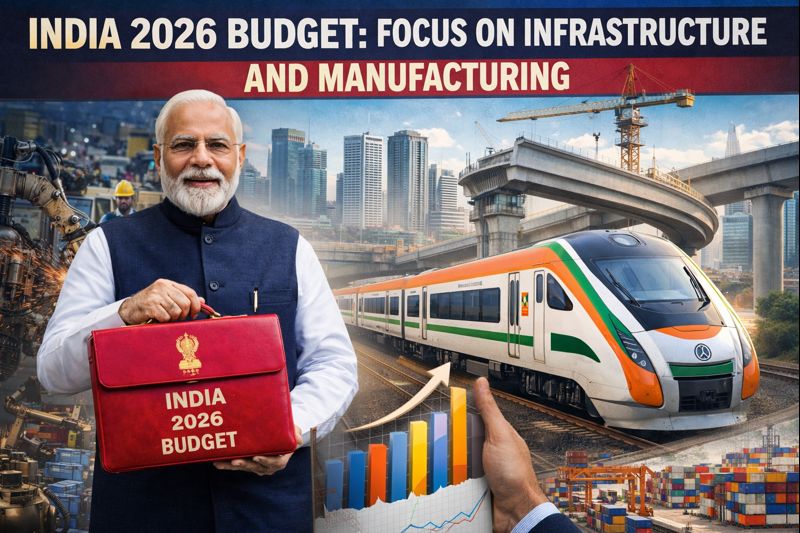
India’s Prime Minister Narendra Modi and his government unveiled the annual budget for the 2026-27 financial year, aiming to maintain steady growth despite global economic challenges and ongoing trade tensions.
Finance Minister Nirmala Sitharaman presented the budget in Parliament, highlighting priorities such as infrastructure development and boosting domestic manufacturing. The total expenditure for the fiscal year is projected at $583 billion.
Economic Context and Trade Challenges
India’s economy has so far weathered 50 percent tariffs imposed by the United States on its imports of Russian oil. To offset these challenges, the government has pursued trade agreements, including a landmark deal with the European Union, to strengthen international partnerships.
Despite these obstacles, India remains one of the world’s fastest-growing major economies. The Economic Survey presented alongside the budget projects GDP growth of 6.8 to 7.2 percent, slightly below this year’s projected 7.4 percent but still higher than estimates by the World Bank and other global institutions.
Infrastructure and Manufacturing Investments
To sustain growth, the government plans to spend 12.2 trillion rupees ($133 billion) on infrastructure, up from 11.2 trillion rupees ($122 billion) last year.
In addition, the budget focuses on boosting manufacturing in seven strategic sectors:
- Pharmaceuticals
- Semiconductors
- Rare-earth magnets
- Chemicals
- Capital goods
- Textiles
- Sports goods
The government will also invest in emerging industries, including artificial intelligence, to enhance India’s global competitiveness.
Fiscal Responsibility and Debt Management
Alongside growth initiatives, the government aims to reduce the debt-to-GDP ratio from 56.1 percent to 55.6 percent and bring the fiscal deficit down from 4.4 percent to 4.3 percent of GDP.
Unlike last year’s budget, which offered tax incentives to the middle class, this budget focuses on long-term economic resilience and strengthening India’s role in global supply chains, without short-term populist measures.
Challenges Ahead
Prime Minister Modi emphasized the importance of long-term solutions for sustainable growth, stating that predictability fosters trust in global markets.
India continues to face challenges in raising the manufacturing sector’s contribution to GDP from under 20 percent to 25 percent, which is crucial for creating jobs for the growing workforce.
The Indian rupee has also weakened to historic lows after foreign investors sold a record $22 billion in equities since January last year, reflecting market volatility.
Financial analysts described the budget as pragmatic but unremarkable, noting it avoids drastic changes while maintaining a steady approach to growth.